English Vocabulary
Size Test
How many English words do you know?
How the Test Works
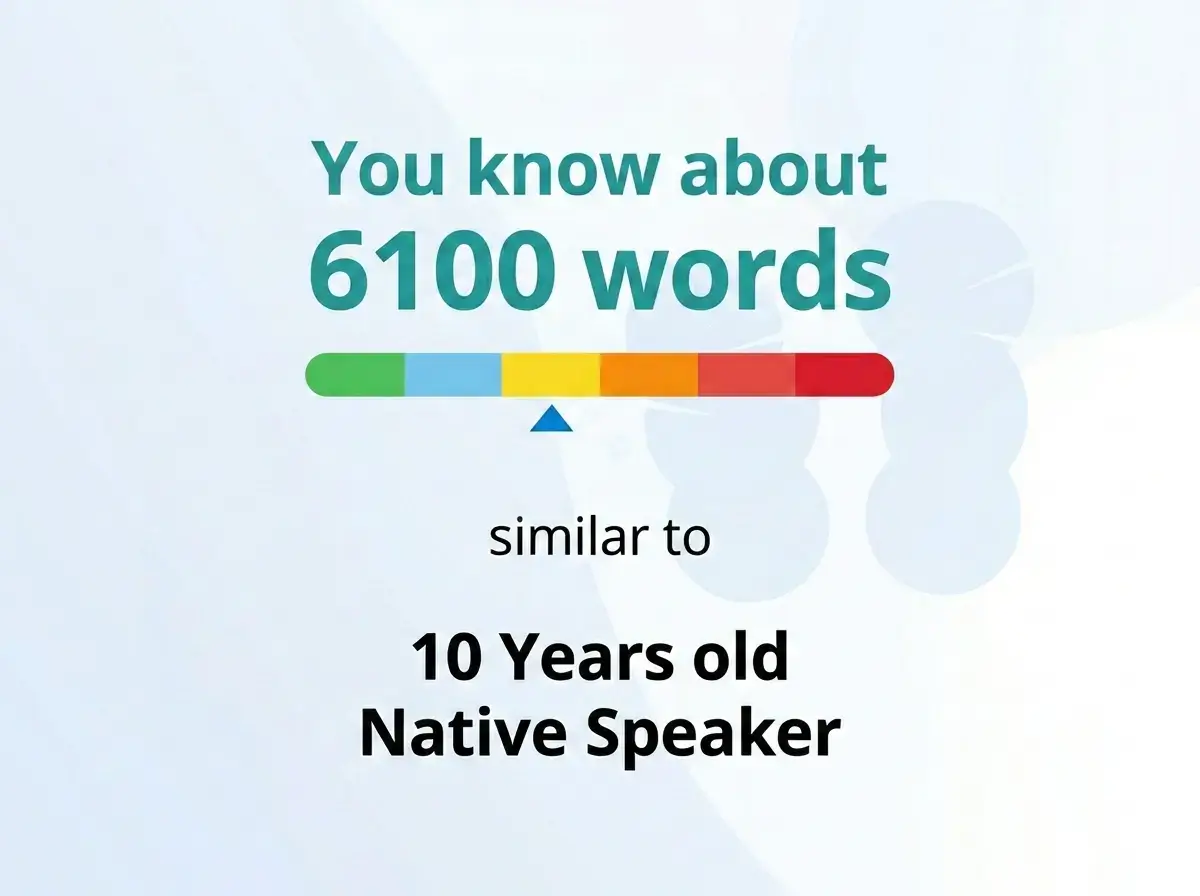
Unlike standard static quizzes, Lingedia’s test uses a dynamic engine to measure your true vocabulary size in under 2 minutes.
- Word Selection: We test you against the 19,300 most frequent head words. By ordering words by their real-world frequency, we ensure your score reflects your vocabulary size.
- The Adaptive Algorithm: Our smart algorithm adjusts the difficulty in real-time based on your performance. If you answer correctly, the questions become harder; if you miss a word they become easier. This adaptive method allows us to determine your vocabulary size with high precision.
Adaptive Algorithm
Calculates your precise tier in real-time.
Is this test accurate?
Yes. Our adaptive engine calculates your vocabulary size with a margin of error of +/- 10%. However, because this is a self-reporting tool, the precision depends entirely on your honesty.
Guidelines for Precise Results:
- Do not Guess: The test includes some fake words, click “Yes” only if you are sure of the exact meaning of the word.
- Repeat the Test: For the highest scientific accuracy, we recommend taking the test 3 times and calculating your average score.
Native VS. Non-Native Vocabulary Levels
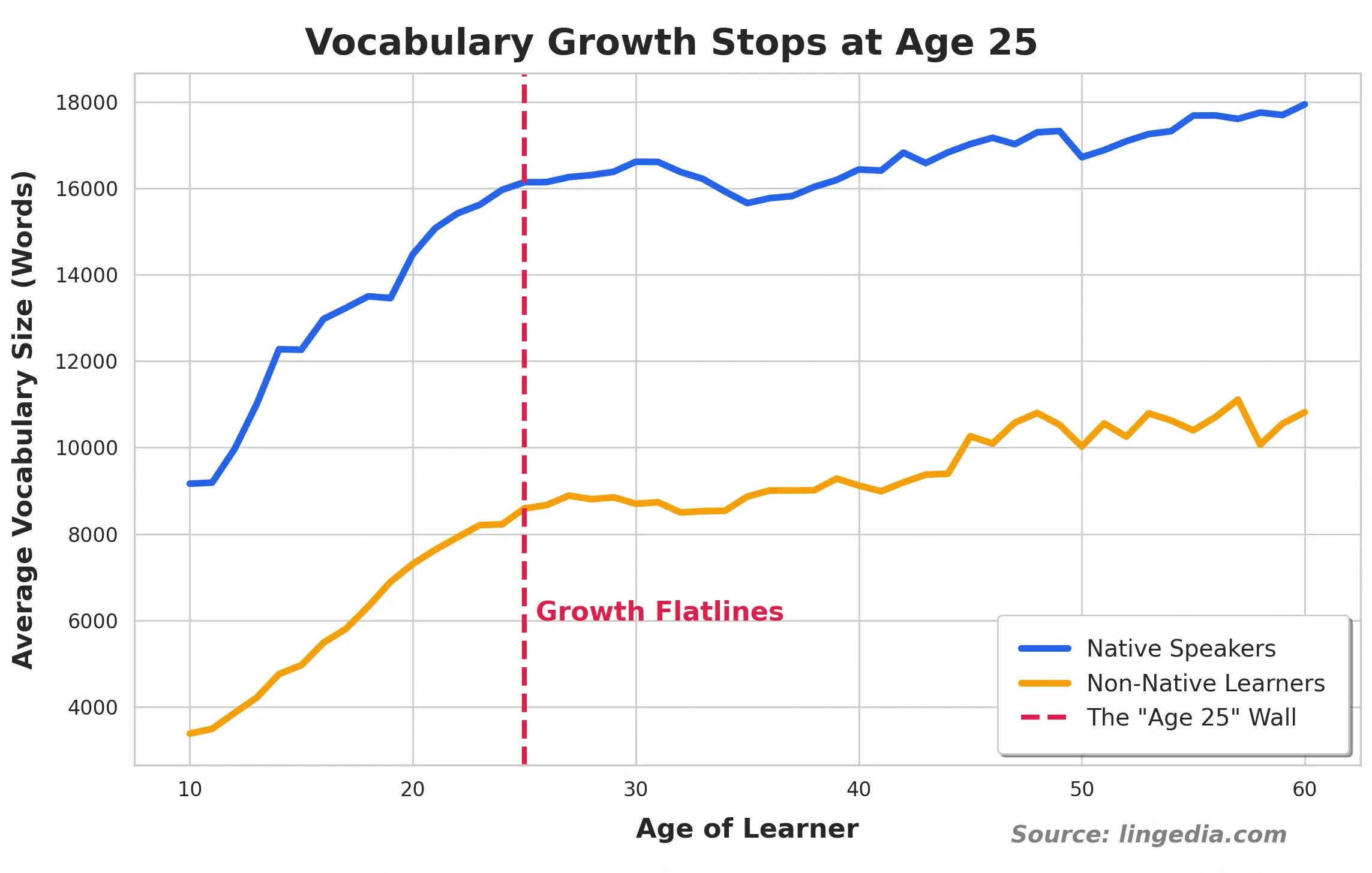
We analyzed over 160,000 test results to create a reliable guide for English vocabulary size. Use this table to compare your score with native and non-native speakers who have a similar education level.
| Study Level | Native Speakers | Non-Native Learners |
|---|---|---|
| High School | 14,149 | 7,053 |
| Bachelor’s Degree | 15,739 | 8,878 |
| Master’s Degree | 16,448 | 10,844 |
| PhD | 16,816 | 11,786 |
* Data based on Lingedia user results.
Key Insights from the Data
- Education Matters: Vocabulary size grows with education. A Master’s or PhD degree typically adds 2,000+ advanced words to a person’s vocabulary.
- When are you Fluent? You do not need 16,000 words to be fluent. You can have great conversations with just 5,000–8,000 words (B2 Level).
How to Stop Forgetting New Words
Knowing your vocabulary size is just the start. The real challenge is keeping new words in your brain. Research shows that without review, learners forget 80% of new vocabulary within 48 hours.
The Solution: Automated Spaced Repetition
Lingedia solves this with a smart algorithm that analyzes your learning process and schedules reviews at the exact moment you are about to forget. This technique moves words from “short-term” to “long-term” memory efficiently.
Why Lingedia is Different
Most Spaced Repetition apps rely on manual self-assessment (asking you: “Did you remember this word?”). This can be boring and inaccurate.
Lingedia does it better.
We integrate Spaced Repetition directly into interactive quizzes. You simply answer the questions, and we do the rest. If you get it right, we schedule it for later. If you get it wrong, we bring it back sooner. This “No-Cheating” approach is proven to work, helping our users master thousands of words permanently.
Frequently Asked Questions
How many English words do I need to be fluent?
To achieve conversational fluency, you need to know about 3,000 to 5,000 English words, which covers 95% of everyday conversations. For professional or academic fluency (C1/C2 level), you will need a vocabulary of 8,000 to 10,000 words. Take our free test to find out exactly how many words you know today.
What is Spaced Repetition for language learning?
Spaced repetition is a highly effective learning method that reviews material at increasing intervals. Instead of reviewing every word daily, Lingedia’s smart algorithm tests you on a word right before you are likely to forget it. This saves time and ensures long-term memorization with minimal effort.
Does Lingedia work for advanced English learners?
Absolutely. While most apps stop at the intermediate level, Lingedia is built for continuous growth. No matter what level you are, Lingedia covers your needs with advanced tools like shadowing, a built-in dictionary, and the No. 1 vocabulary builder in the market.
Can you really learn English by watching movies?
Yes, but only through active learning. Passively watching movies won’t improve your vocabulary much. However, using Lingedia to watch movie clips, tap unknown words, and save them instantly, alongside the listening and speaking exercises, makes it one of the most effective ways to master natural, real-world English.
How long does the Lingedia vocabulary test take?
The Lingedia vocabulary test takes 2–3 minutes to complete. Because our test uses an adaptive AI algorithm, it quickly adjusts to your skill level in real-time to give you a highly precise vocabulary size estimate without wasting your time.
Is the Lingedia app free?
Yes! You can download Lingedia for free on iOS and Android to start learning immediately. We offer a generous set of free features, alongside premium tools available at affordable, student-friendly prices.

